
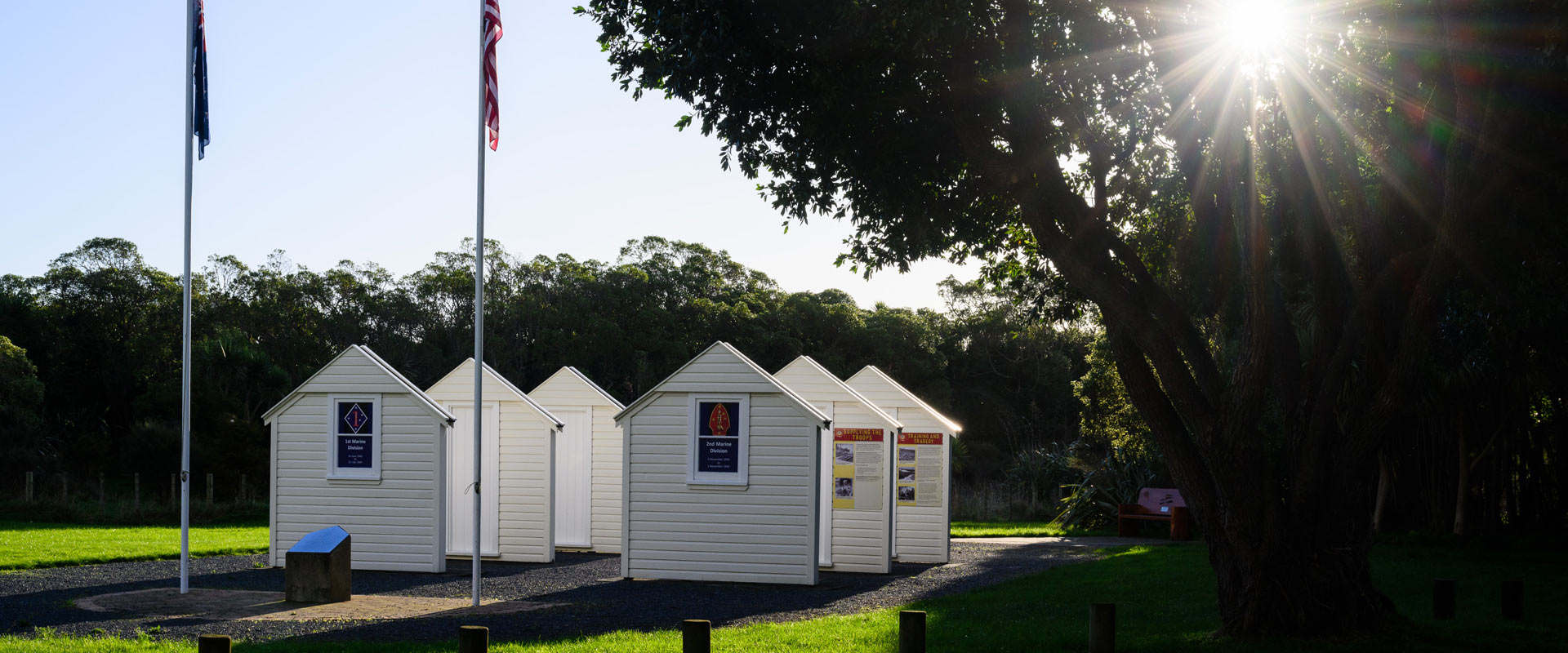
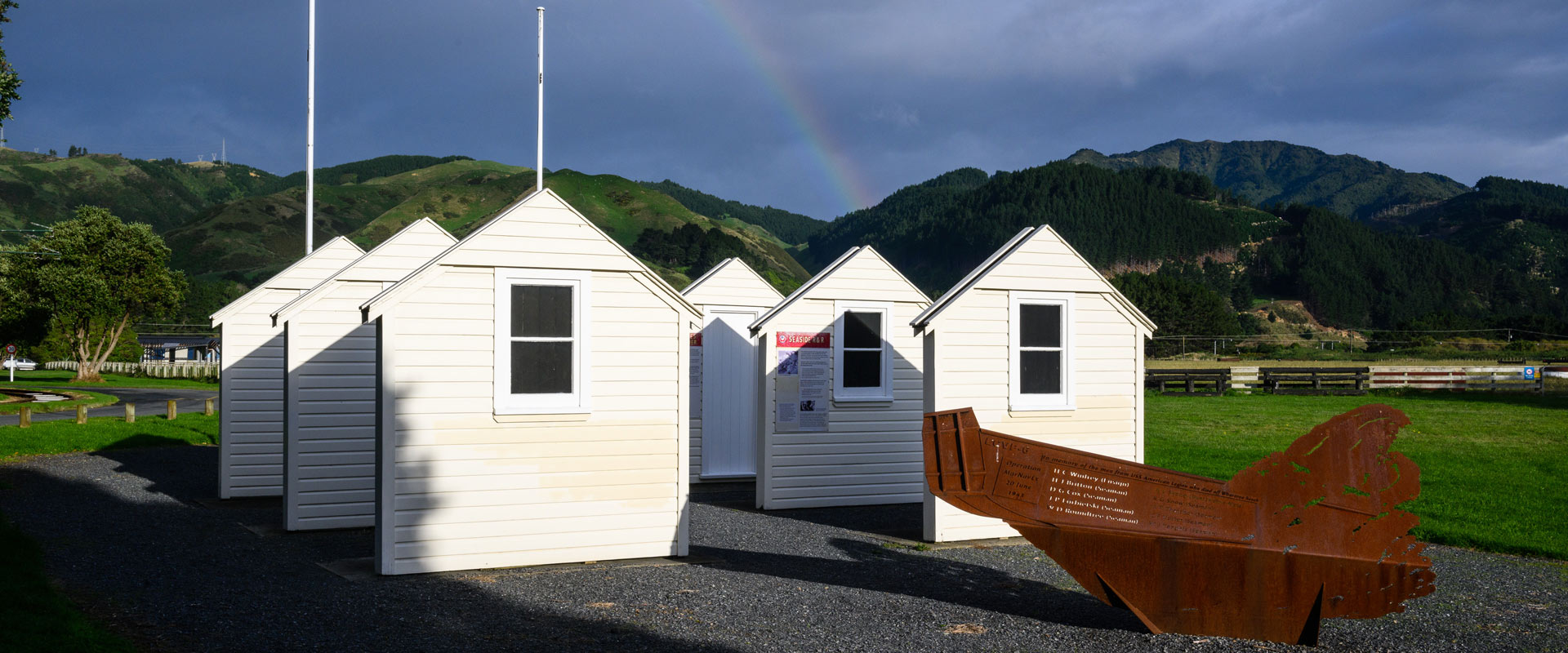
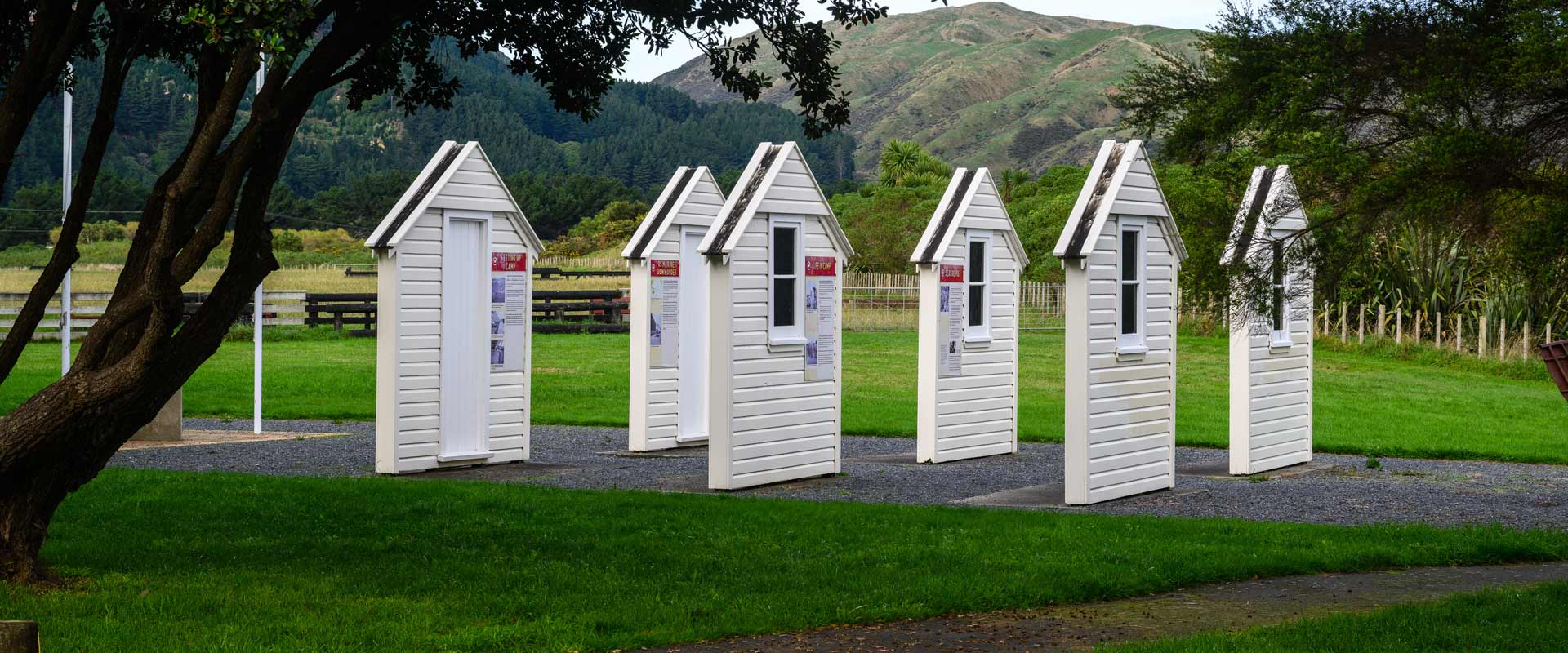
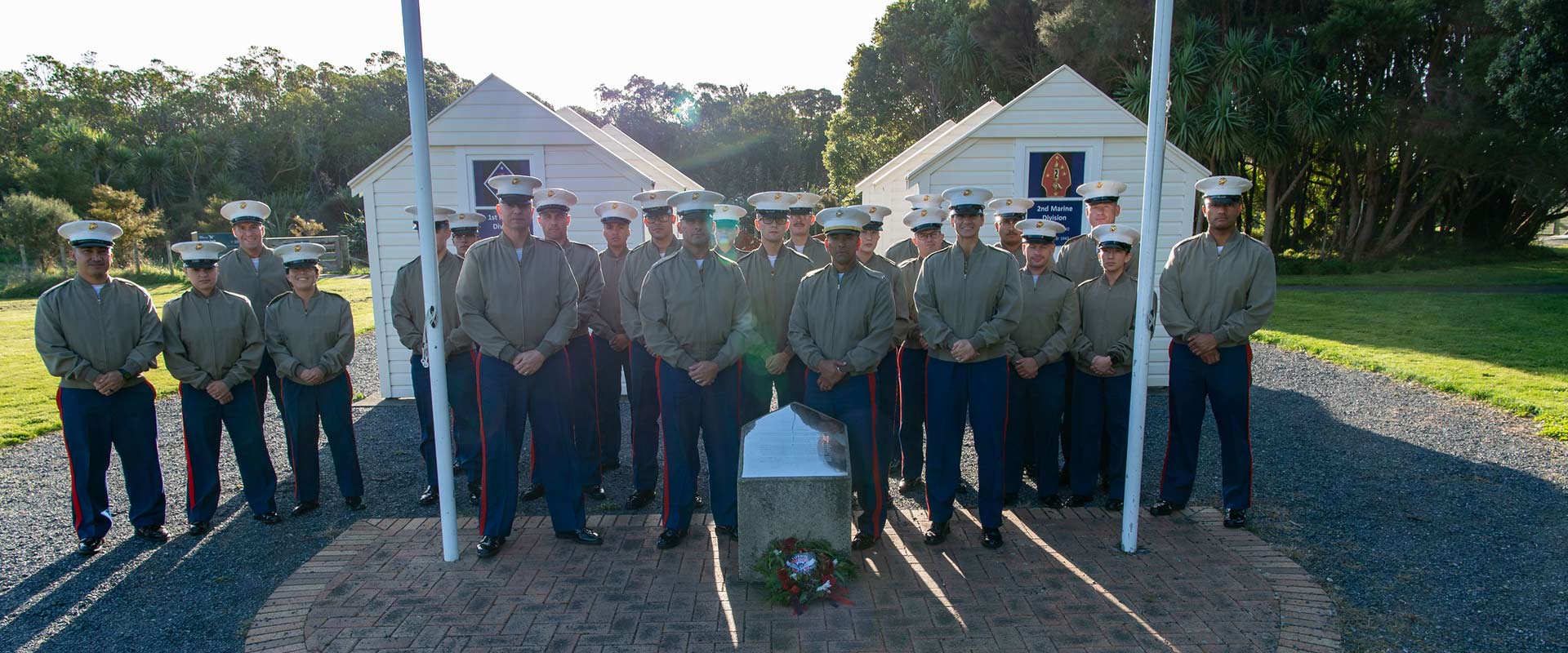
The U.S. Marines Memorial commemorates the thousands of United States Marines who trained and lived on New Zealand’s Kāpiti Coast during the Second World War before deploying to some of the Pacific War’s fiercest battles.
Located on the former site of Camp Russell, one of three large Marine camps established in the area in 1942–43, the memorial stands as a lasting symbol of the friendship forged between local New Zealand communities and American servicemen during a critical period of the Pacific campaign.
Designed by landscape architect Rob Pryor and constructed by Paekākāriki contractor John Mills, the memorial was officially opened on 27 June 1992 to mark the 50th anniversary return visit of U.S. veterans. More than 500 veterans, family members, local residents and dignitaries attended the ceremony, including U.S. Ambassador Della Newman, Kāpiti Mayor Ivor Trask and Wellington Regional Council Chair Stuart Macaskill.
The memorial was jointly developed by the Greater Wellington Regional Council and the Kāpiti Coast District Council, with support from local volunteers and Taskforce Green teams. The original interpretation panels were designed to preserve and share the story of the Marines’ presence in New Zealand and the extraordinary wartime connection between the two nations.
The structure’s distinctive hut “faces” reflect the regimented layout of Camp Russell, which once spread across the surrounding farmland. Their spacing and proportions represent the small two-man huts used primarily by Marine officers. After the war many of these huts were relocated and reused throughout the district as sleepouts, sheds and holiday cabins — enduring reminders of the American presence in the region. Not far from the memorial, visitors can also see a fully restored World War II U.S. Marines hut.
The memorial occupies land that once formed part of a vast wartime military landscape. Photographs from the 1992 opening show an exposed site framed by bare paddocks and surrounding hills, closely resembling the appearance of Camp Russell during the war years. The pōhutukawa trees that now define the memorial precinct were planted during the opening ceremony itself.
The site was significantly upgraded for the 70th anniversary commemorations in 2012, when the Sailors’ Memorial was also installed.
With the aid of a Lotteries grant, the Kāpiti U.S.Marines Trust has begun to upgrade the Marines Memorial. The redevelopment work includes new interpretive displays, improved infrastructure and digitally connected signage linking visitors to archival photographs, oral histories and wartime film footage from the Trust’s extensive collection.
The upgraded displays will also feature rare images from the internationally significant Norm Hatch Collection, acquired and digitised from archives in the United States with support from the U.S. Embassy in Wellington. These photographs provide a vivid record of Marine training, daily life and departure for combat in the Pacific.
For many American visitors, the memorial carries a particularly poignant meaning. Thousands of Marines who trained at Camp Russell later fought in the Battle of Tarawa in November 1943 — one of the bloodiest and most consequential battles of the Pacific War. Within days of leaving New Zealand, many of the men remembered here lost their lives in combat.
Today the U.S. Marines Memorial continues to serve as an important place of remembrance and reflection. Annual Memorial Day ceremonies held at the site honour the sacrifice of American servicemen while also recognising the enduring friendship between New Zealand and the United States forged during World War II in the Pacific.